All posts Fears & bedtime confidence
Overcoming Fear of the Dark: Support Without Reinforcing the Fear


If your child suddenly starts calling out at night, begging you to keep the lights on or check for monsters under the bed, know that this is very common. Fears of the dark often appear in toddler and preschool years, and while the instinct to comfort is strong, how we respond really matters! Our approach can either help shrink those fears… or accidentally make them grow.
As a pediatric sleep consultant, I’ve helped countless families work through these very real feelings in a way that supports the child without reinforcing the fear. The goal isn’t to prove there’s nothing scary (that’s a trap many well-meaning parents fall into). Instead, we want to help your child feel capable, secure, and confident in handling those big feelings on their own. Your calm, steady presence plays a powerful role in that.
Understanding the Fear of the Dark
Young children are imaginative and highly perceptive. That imagination helps them play and explore, but it can also turn a shadow into a monster or a creak into something lurking. Common contributors to fear of the dark include:
- Imaginative Development: Around ages 2–6, imagination takes off. Shadows, sounds, and even bedtime silence can take on a life of their own.
- Past Experiences: Even one scary show, story, or jump-scare can fuel nighttime fears.
- Separation Sensitivity: Fear of being alone (especially at night) can overlap with separation anxiety and trigger bedtime protests or wake-ups.
Why “Monster Spray” Isn’t the Answer
You might’ve heard well-meaning advice to make “monster spray” or check closets every night. While it comes from a place of love, these actions unintentionally send the message that the fear might be real. It’s like saying, “Monsters are real. They’re just not here right now. We’ll check again later”.
The message becomes:
“You’re safe… because I made sure of it.”
Instead of:
“You’re safe, and you can trust that.”
This teaches the brain to keep looking for danger and keeps your child dependent on outside reassurance, instead of building internal confidence.
What works better? Confidence. Calm. Reassurance. Teaching them what to do when they feel afraid. Because fear will come, and that’s okay.
A Better Way: Personify Fear, Don’t Feed It
In our house, we gave fear a name. We just call him Fear.
He’s not bad, and he’s not the enemy. Sometimes he just gets a little mixed up, and tells a very big story about a sound or a shadow. Kids do well when we treat Fear like a visitor:
“Looks like Fear is getting a little loud tonight. But we’re safe in our room. He can settle down now.”
Naming fear, drawing it, or giving it a silly voice can help externalize the feeling so your child doesn’t feel consumed by it. From there, you can teach coping strategies they can use when fear shows up.
Supportive Strategies That Build Independent Sleep
Validate Briefly, Then Hold the Boundary
Acknowledge their feeling with a simple:
“It feels scary right now. That’s okay. You’re safe.”
Then stop. You’ve reminded Fear what’s true. Let that be enough.
Offer Predictable Comfort
Use a consistent goodnight phrase, a quick squeeze, or a hand-on-heart routine. The predictability offers comfort without inviting negotiations.
Choose Tools That Build Confidence
- A dim nightlight (not a full room glow)
- A trusted stuffed animal (“Your snuggle buddy”)
- A visual routine chart they can follow
These tools support independence without undermining their ability to cope.
Teaching Replacement Habits
Just like you teach your child to say “excuse me” instead of interrupting, you can teach a new habit for what to do when fear shows up at night:
- Take 3 deep breaths
- Squeeze their snuggle buddy
- Repeat a simple phrase: “I am safe. My room is cozy. Mommy loves me.”
Practicing these during the day is key. Let a stuffed animal be the one who’s afraid, and let your child be the one who reminds him what’s true:
“Oh no! Fear popped up. Let’s tell him he’s done his job, we are safe, and we’ve got it from here.”
Key Takeaways
- Fear of the dark is common and completely normal.
- How we respond matters: Confidence calms. Too much reassurance often backfires.
- Empower your child with simple coping tools they can use on their own.
- Give fear a name (in our house, he’s just “Fear”) so your child can notice it, talk back to it, and remember what’s true.
- You don’t need monster spray, just a steady presence and the right plan.
Need More Support?
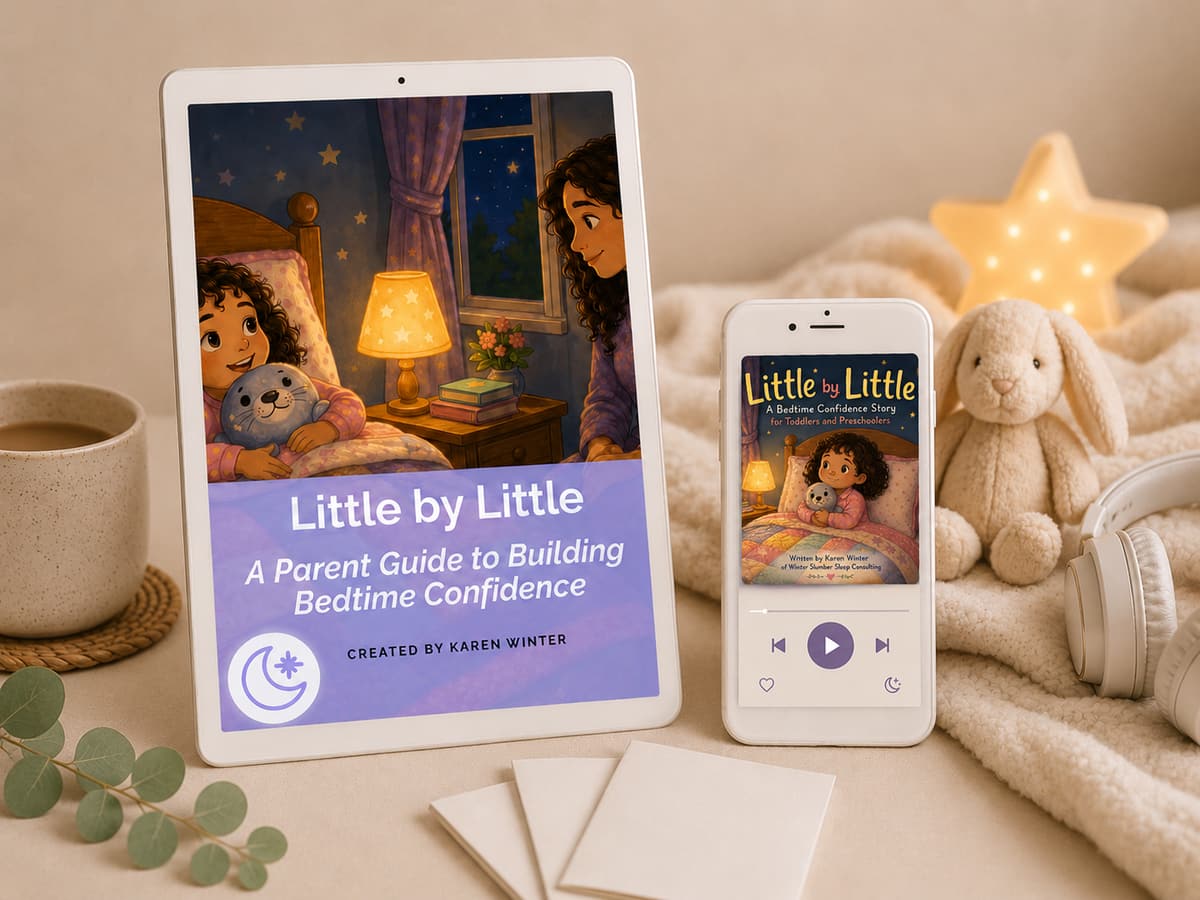
If bedtime fears have become part of your evenings, I made something for you. My free guide, When Fear Shows Up at Bedtime, walks you through this same gentle shift, and introduces your child to Fear, the little guy who helps them remember what’s true. There’s even a printable page for your wall. You can grab it free HERE.